‘What can we do better?’ – Inside Sokito’s bid to reinvent soccer boots and challenge the big brands
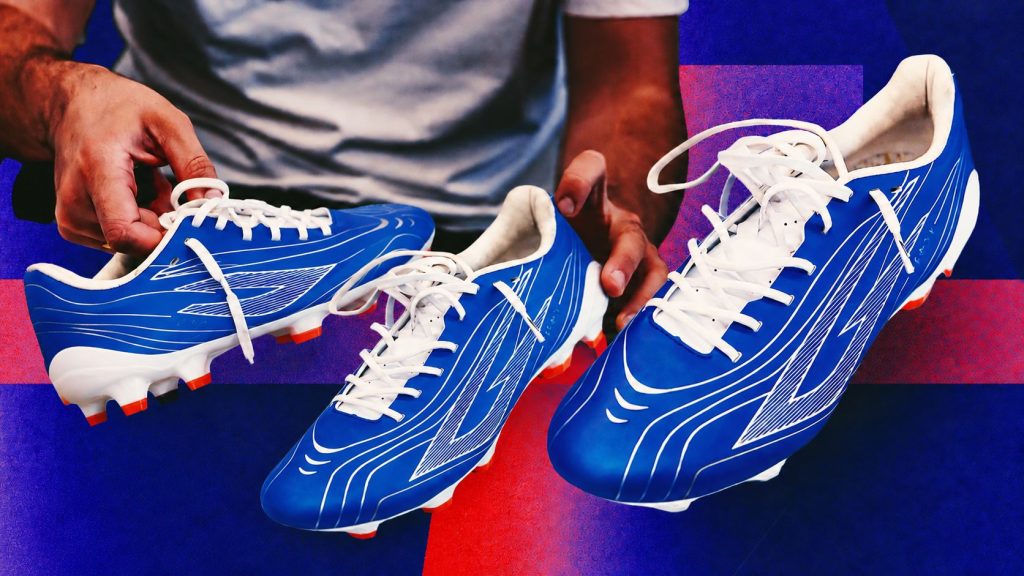
Hardy’s biggest role model, his company’s north star, isn’t Nike or Adidas. It isn’t any of the other traditional soccer brands, either. No, when Hardy envisions what he wants this all to look like, he looks at ON.
For years, ON was a small running shoe company. In 2019, that changed when tennis star Roger Federer joined the business. The company is now worth billions. Yet even that success leaves it competing against much larger rivals. It shows both how vast the market is and how much room there is for newcomers to build their own business.
How do you make up that gulf? Well, you don’t. You just find your own place in the ocean. That applies to music, where SoundCloud allows artists to bypass record labels so that talent can shine through. It applies to Instagram and TikTok, which have allowed creatives to showcase their own work in whatever field they choose. And, yes, it applies to soccer boots, too.
“If you said to someone 10 years ago that there’s a brand that’s going to take a huge cut of the running market, you’d say they were insane,” Hardy says. “There’s opportunities in everything now, though. Look at cars. With the electric car manufacturers, they’ve approached an industry which is owned by giants, which are powerful, but slow moving. They looked at that industry and went, ‘What can we do better? As a consumer, what would I want if I could design it from scratch?’
“That’s what we’re doing. Building everything with athletes is really important. Using sustainable materials and reducing the impact? It just feels like that should be the case. How we release product is important and is not driven by marketing cycles. There are things which were either frustrating or just seemed wrong when looking at the industry. We don’t have to follow any of these norms of the industry which have been set over 20-30 years. We can go, ‘That doesn’t really make sense, so let’s do the opposite and let’s do what does make sense’.”
That industry is changing by the day. Post-Covid, even the big brands have changed how they do business. Prior to 2020, the big companies were firing out sponsorships in volume, signing as many athletes as they could to boot deals. Because of that, virtually every player in the Premier League was wearing Nike, Adidas or Puma.
That’s no longer the case. Smaller brands, like Sokito, can carve out their own little niche, allowing athletes to both partner with a brand they believe in and be a part of that brand not just as a sponsored player, but as an owner. They can design the products. They can determine what colors or innovations make sense. And, maybe, if it all works out, they can do so without sacrificing the guaranteed money that comes from the big companies.
“The big ones will still exist, right?” Hardy says. “Those enormous boot deals for superstars will still be there, and that probably makes sense for players in that position. I think there’s a kind of player empowerment movement at the moment, which is where it’s all coming from. They’re understanding and appreciating that they’re the valuable ones in this rather than the brands. If they have personality and willingness to explore it, they can take their personal brand and earnings a hell of a lot further by thinking outside the box.
“If you look at it now and say, ‘Right, if I turned out 20 grand a year’, for example, ‘will I get 20 grand a year back from doing something where I’m not getting paid immediately?’ The fact is, if it’s executed well, then yes, maybe, and possibly a hell of a lot more.”
So, for Sokito, what is success, then? How does a small fish approach the bigger ones? When Hardy sits in his living room 20 years from now with a new boot in hand to tinker with, what would make him proud?
It’s difficult to explain, he says, but, in the end, he’ll know if it all worked out. So, too, will the athletes alongside him that have helped him build a childhood dream into something he still can’t quite believe is real.
“It’s about impact, and that’s quite hard to measure, but we’re fairly happy with that approach,” Hardy says. “We’re not saying that success is selling for 200 million in two years’ time or that success is selling 50 million pairs of shoes in a year. Those things are way down the line. We want to continue growing the brand in the right way, and not compromise on our morals. We want to make impact. We’re working on a lot of ways to do that. We’re working on a foundation. We don’t send any product to landfill. We redistribute it all. We recycle.
“Football can have such an amazing impact on everybody. It’s so uniting, and we want to really be at the forefront of that, and make some really good shoes as well.”