Why a 7-0 loss at Newcastle led to our golden era | History | News
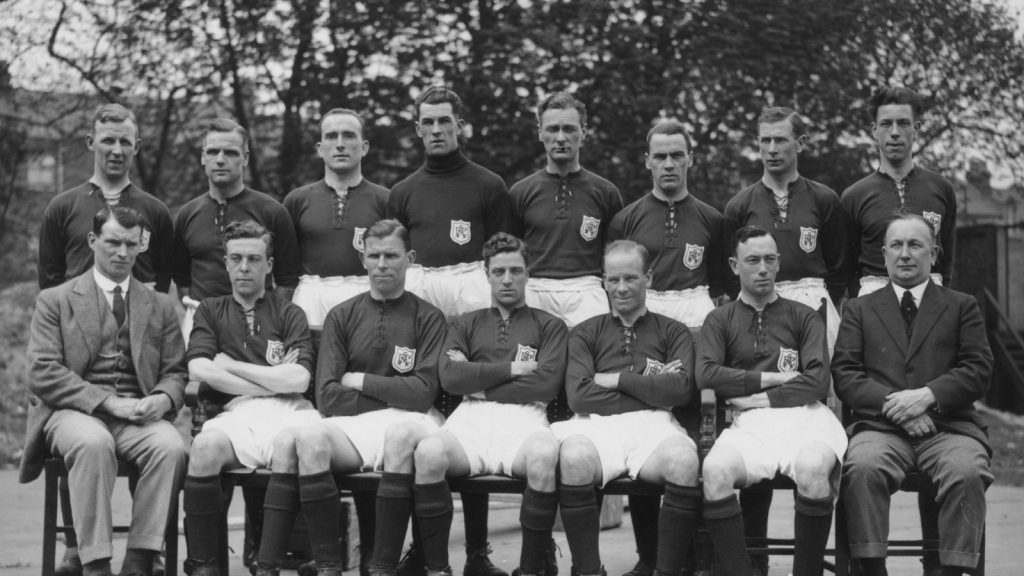
In late September 1925, with new manager Herbert Chapman at the helm and iconic forward Charlie Buchan in the ranks, Arsenal suffered a humiliating 7-0 reverse at Newcastle United.
During the close-season, the offside rule changed so that only two defenders (it was previously three) needed to be between an attacker and the goal. At St James’ Park, our defence crumbled under wave upon wave of Newcastle attacks and found ourselves 6-0 down at half-time.
The key was Newcastle centre-half Charlie Spencer, who remained in a very deep position and although he contributed little to the rhythm of his side’s attacks, he repeatedly snuffed out our advances. His display convinced Gunners skipper Buchan and Chapman that we needed to radically alter our tactics. In his book A Lifetime In Football, Buchan claims: “New methods were required and Arsenal were the first to exploit them.”
At a team meeting at their hotel in Newcastle, Chapman asked Buchan to air his views on how matters could be improved. One of his suggestions was that a deep-lying centre-half should be deployed to guard the edge of the penalty area, rather than man-mark a centre-forward – similar to zonal marking in today’s game.
Buchan argued that role should take responsibility for deploying the offside trap rather than the two full-backs, while the centre-half should be “a dominating personality around his own goal, and should not be content just to get the ball away anywhere, but to send it, with head or feet, to the roving inside-forward”.
Jack Butler was initially asked to operate as a the deep-lying centre-half (which quickly became known as centre-back). Butler played in our first FA Cup final in 1927, and his pioneering role in the Gunners’ revolutionary WM formation was crucial.
During the team meeting, Buchan also argued that withdrawing the centre-half (Butler) would leave us short of personnel in midfield, and suggested he should drop back from his inside-right position, but was overruled because he was required to score goals.
Read more
The goal machine who starred for us and Sunderland
Instead the role of the roving inside-forward was handed to Scottish wing-half Andy Neil, a third-team player. Despite being described by Chapman as being ‘as slow as a funeral”, he was two-footed and could pass well, meaning he was the ideal candidate to be picked out regularly by Butler to instigate counter-attacks by finding centre-forward Jimmy Brain or Buchan.
Neil’s elevation speaks volumes for Chapman’s eye for the tiniest detail, and his ability to recognise which skills were needed where in the team. Neil’s influence was fleeting though as by the season’s end, he’d be gone, as Chapman gradually upgraded his squad. The system would eventually work fluidly as we moved into a new decade with Herbie Roberts operating at centre-half, and inside-forward Alex James supplying the ammunition for Joe Hulme or Cliff Bastin.
The calamitous 7-0 defeat in the north-east a century ago catalysed the classic Arsenal Mark 1 WM model, later tweaked to perfection by Chapman as we swept all before us in the 1930s.
Read more
100 years on: The crazy story of our oldest player
Copyright 2026 The Arsenal Football Club Limited. Permission to use quotations from this article is granted subject to appropriate credit being given to www.arsenal.com as the source.