David Seaman: Life at the top | Feature | News
David Seaman arrived at the club at the start of the 1990/91 season and slotted straight into the team that had won the league title on that famous May evening in 1989.
The charismatic goalkeeper elevated that side to even greater heights though, and his impact was immediate – he was ever-present in his first season as we won the title again, losing only once all season in the process.
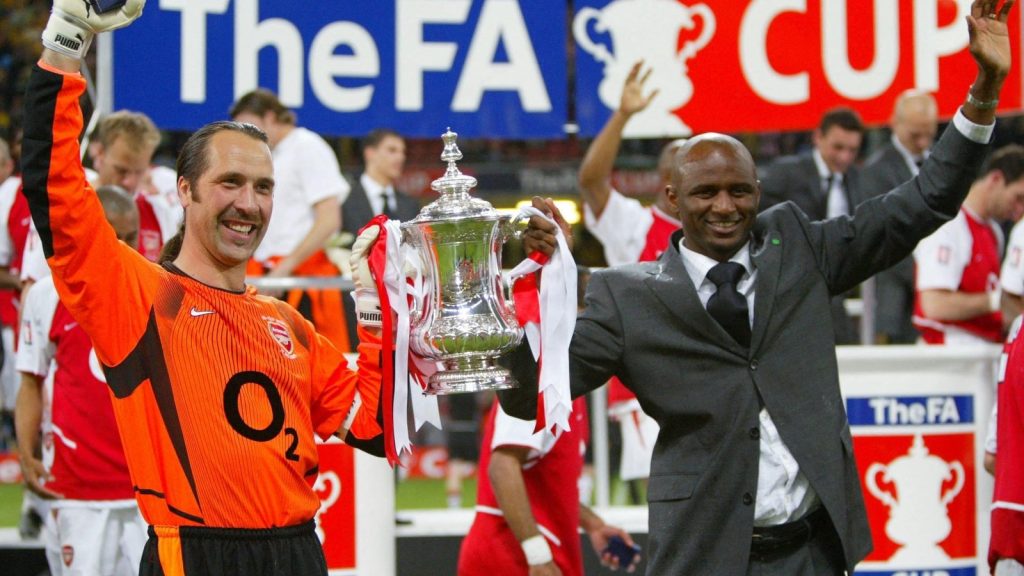
Over the next 13 years he would become a true club legend, playing more than 550 times to be sixth in our all-time appearance tally, winning two more league titles, four FA Cups, the League Cup and European Cup Winners’ Cup.
The 75-cap England international also kept the most clean sheets of any Arsenal keeper ever (234) and lifted the 2003 FA Cup as captain in his final game for the club. Still a regular at Sobha Realty Training Centre, where he often coaches our Academy goalkeepers, we caught up with David by the fishing lake earlier this week.
Arsenal had won the league just a year before you joined in 1990. Did that play a part in you deciding to join?
That was the reason I joined the club: to win trophies. I had the option of going to Manchester United as well, because when I first came to sign for Arsenal the deal fell through. It was near the end of the previous season, around the transfer deadline, but John Lukic didn’t want to leave, so it didn’t happen.
So I went back to QPR, but before Arsenal had bid for me I’d spoken to Sir Alex Ferguson, who told me he was coming in for me. They wanted me as a free agent because my contract was running out. I spoke to Ray Wilkins, who was at QPR then, and asked him what he would do. He said, “If you go to United, you won’t win trophies straight away because they’re rebuilding. But if you go to Arsenal, you’ll win trophies straight away.” It turned out he was right!
It was instant – you won the league in your first season, and didn’t lose any of your first 17 matches in all competitions. You must have been delighted how seamlessly you fitted into the club?
I was because it underlined the reason why I came to the club, winning the league in my first season. Playing with players that were already champions and winners in their own right from seasons before. But to concede only 18 goals that season, losing only one game in the league – it was everything I could have dreamt of.
What were the main changes from being at QPR when you arrived at Arsenal?
It was much better because I was getting time with Bob Wilson every day. Seriously, that made a big difference. The fact I had him there every day was brilliant, because he wasn’t just a coach, he was a great friend. People ask me what he taught me, but it wasn’t really about that. It was more that he knew exactly what I needed.
I was 26 when I joined the club, so I was already an established goalkeeper. I’d had four years at QPR and one year with Birmingham City in the top division as well – so five years’ experience at the top before I came to Arsenal. So it was more about having a good routine with Bob, and him knowing exactly what I needed.
After dominating the league in 1991, we didn’t win another title for the next seven years. Why do you think that was?
Well, there was always something, every season. We were winning cups, we won in Europe in 1994, we got to another European final in 1995 – when that ex-Tottenham player scored from you know where! We reached semi-finals too but I don’t know why the focus shifted to be honest.
The team didn’t change a lot, it was the same defence for that whole time, and Martin came in as well, but I always say the league is the real gauge. And you have to get off to a good start in the league, and if that doesn’t happen then maybe you have a better chance in the cups. Manchester United and Leeds were very good teams at that time as well, and that coincided with it, but I don’t know why that focus shifted for us.
Your career straddled different eras, with the backpass rule coming in for 1992, and the launch of the Premier League as well. When you look back at your career, do you section it into different periods like that?
No, I didn’t see it like that. The backpass rule was really tough to get used to though. People ask me now if I could play out from the back, and I say I had to adjust my whole game for the backpass rule, so if I can deal with that, I can deal with playing out from the back – 100 per cent! I gave away so many free kicks when that came in, because I was just doing what naturally comes to you, it was instinct.
But I don’t really see my Arsenal career as different sections, because there wasn’t a gap when we weren’t winning trophies or competing. The cup double in 1993, European finals, we went out on penalties a few times, and then Arsène came in and we won the double in 1998 and again in 2002.
Arsène arrived in 1996 with fresh ideas, but didn’t change the goalkeeper or the defence – did he explain to you all that he was going to stick with that?
Not that I can remember, but the fact that he didn’t make many signings there meant we knew he wasn’t going to change it, and it worked. That back four we had, it wasn’t by fluke that it was successful.
I think he saw us working in training every day as well. We all worked hard together in training, and saw how we were as a unit. People were coming to the end of their careers though, so eventually he brought in people like Lauren at right back, Ashley Cole came through and then, after Tony Adams, Sol Campbell came in. But at the start he knew he didn’t need to do that, and he got a few more seasons out of that back four.
He brought in goalkeepers too, including Alex Manninger, who sadly passed away last month…
That hit me hard. I posted a picture of us fishing together, and he was only 20 at the time. It’s so sad. He was a great guy. He wasn’t erratic, that’s the wrong word, but he would really go mad at himself if he made a mistake in training, and it would affect the rest of his session, because he was so desperate to do well. He really wanted to get in the team, and he knew where the bar was, so I think he was trying to get to that level before he had done all his training, because as I say, he was only 20 when he came in.
But that season he was fantastic. He came in for 13 games, he played when we beat Manchester United in that 1-0 at Old Trafford and he won a penalty shootout in the cup at West Ham. He was brilliant for us at that time.
You obviously had many understudies during your time. What sort of relationship did you have with them all?
Yes, there was Alex, Stuart Taylor, Richard Wright; Alan Miller was there when I arrived. We all trained together and it was always a really good atmosphere. I felt OK but it’s tough to ask me, because everything was going well for me, so it’s probably a question more for them.
I remember when Richard Wright came in, they paid a lot of money for him, so that’s when I started thinking that maybe they had brought him in to be a number one. That’s when I said in my head, “Well in that case I’ll raise my game, and I’ll show you.” It wasn’t just in games, it was in training too because that’s when you are judged.
Arsène would always come over and watch ten minutes of our sessions, because we trained separately until we joined in with the outfield players. I remember him saying to me once at a session, “David, why does the goal look so small when you are in it and so big when Richard is in it?” So I knew I was doing something right!
What do you make of the current team, and how the run in is shaping up?
It’s all about the results now – it’s not about how we play. If we play well, that’s a bonus. It’s all about getting a result. That 1-0 over Newcastle, we didn’t play well – I don’t care. We won, that’s what it’s all about.
If you end up winning by three or four, great, and it could come to goal difference. But it’s playing with nerves and it’s tough at the moment. I was at the Bournemouth game, and I could feel that tension from the crowd. This is the time we need to help them, get behind them because we’ve not been in this position for 20-odd years, so we know the pressure is on.
But the more positive the fans can be, the better, because that will make us play better and help any nervousness. We need to get behind the lads because this could be a special time. Embrace that, and let’s try to move it forward. Let’s be more positive.
What are your thoughts on David Raya and the season he has had?
He’s getting better and better every season and it’s so good to see, because when he first came in he struggled a little bit. Whether that was taking over from Aaron Ramsdale, who was a fans’ favourite, but he was on my podcast recently and he said he’s reached a point now where he knows he’s got to do it this way.
He’s changed, he’s got the No.1 shirt and he believes, he knows now, that he’s the number one and he’s just getting better and better. What I like about him is that he doesn’t have a lot to do in the games, and then he still makes these massive saves. That’s the sign of a really top-quality goalkeeper.
Read more
How David Raya won the 2025/26 Golden Glove
Copyright 2026 The Arsenal Football Club Limited. Permission to use quotations from this article is granted subject to appropriate credit being given to www.arsenal.com as the source.