3 things Tottenham should learn from Chelsea’s FA Cup final to earn a rare Stamford Bridge win

 Add as preferred source on Google
 Tottenham Hotspur were gifted a chance to finally leave their relegation woes behind them and guarantee Premier League survival, but they have to get a result at Chelsea to do it first.
Spurs now have a chance to etch a silver lining onto what will be, without a doubt, remembered as the worst football season in their modern history.
Newcastle’s win over West Ham means Tottenham need only one point from their two remaining games to seal safety, and Spurs have their first chance to do just that in their visit to Stamford Bridge tonight.
Chelsea themselves have to contend with what has become a properly derailed season. Their loss to Manchester City in the FA Cup final on the weekend not only compounded their losses, but it also gave Spurs time to tactically prepare for their game against a tired Chelsea side.
So here are 3 tactical ideas from Chelsea’s loss to Manchester City in the FA Cup final and how they relate to Tottenham’s fixture tonight.
1. Callum McFarlane must make back five decision
Ever since Chelsea’s draw at Anfield, Callum McFarlane has opted to play a back three with wide wingbacks in Cucurella and Malo Gusto.
A part of it can boil down to his ideas to approach his games against Liverpool and now Manchester City with defensive solidity as a priority. But for the extra man in defence as well as the extra width that a back five provides, it did limit Chelsea’s ability to effectively attack the box.
McFarlane could very well stick with his formation from the final and let Spurs control more of the possession, knowing that their squad likely lacks the individual quality and creativity to consistently create chances against a settled defence.
2. Blocking Levy Colwill’s passing lanes will be crucial in Chelsea vs Tottenham
In the FA Cup final Levy Colwill played an outstanding game in the middle of Chelsea’s backline. McFarlane’s passing frequently broke through City’s lines of pressure, managing to find the spare man in midfield.
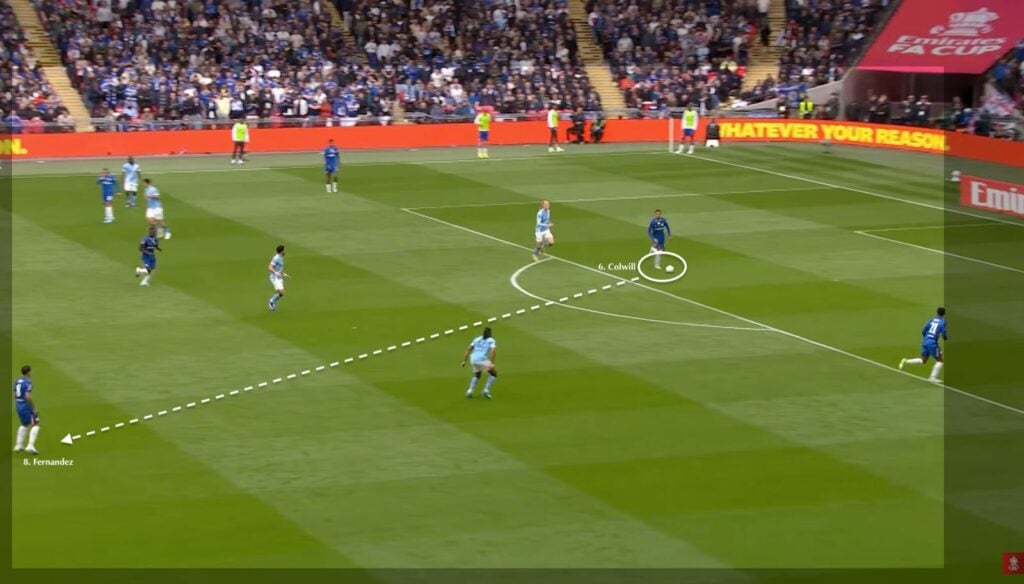
If Spurs want to approach the game on the front foot and really get at an easily rattled Chelsea side, the organisation of their press will be crucial.
Tottenham actually already have a good pressing record, since De Zerbi took charge, Spurs’ press manages to win the ball back high up the pitch more than any other team in the Premier League.
While Leeds were largely comfortable with abandoning their central build-up structure to instead play channel balls into their wingers, against a heavy-in-possession side like Villa, Spurs’ press can create a favourable matchup.
3. Chelsea’s wide midfielders could set up a crucial battle in the middle of the pitch
In their game against Manchester City, City took control of the centre of the pitch, so Callum McFarlane instructed his two most advanced midfielders, Cole Palmer and Enzo Fernandes, to play almost on the touchline and form attacking pairs with their wingbacks.
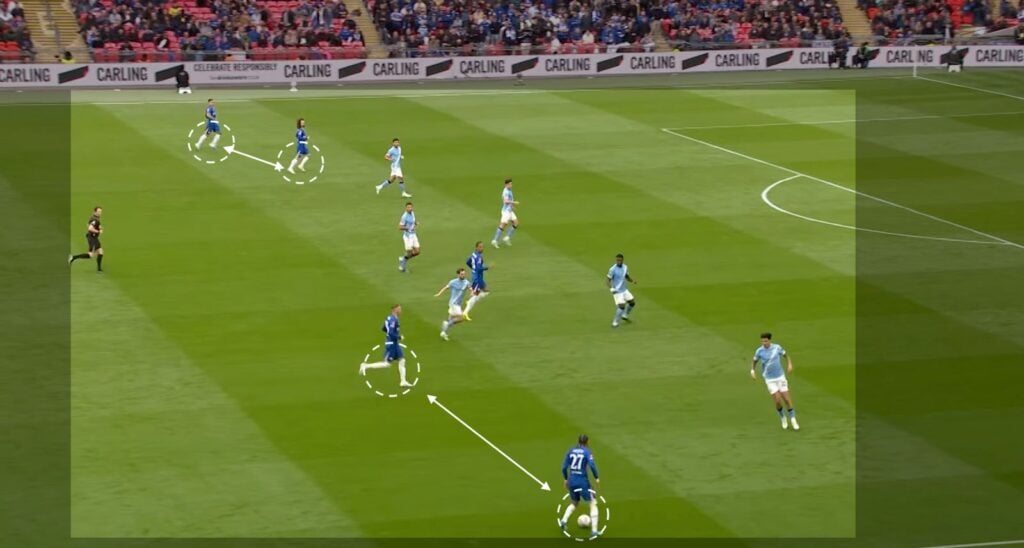
This allowed Chelsea to consistently progress with the ball into City’s defensive third in the wide areas of the pitch. Chelsea’s overloads on the wings (their two wingbacks moved up to support their attacking midfielders) weren’t enough to break the City defences, especially because, as Chelsea started pressing higher up the pitch, they were unwilling to commit numbers to the City box for crosses to guard against their transitions.
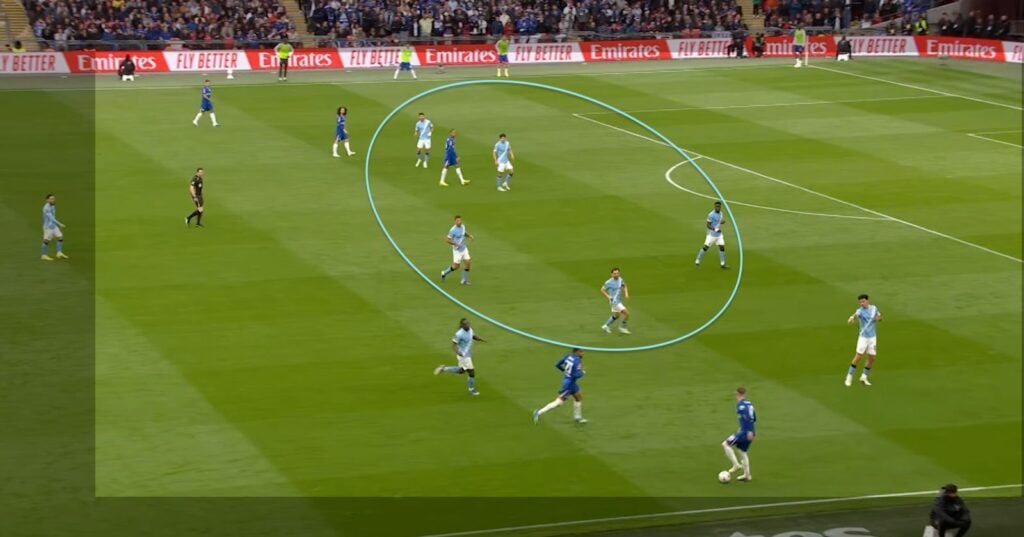
That in the end proved fruitless anyway. Man City were able to exploit even the smaller spaces left by Chelsea, and Man City’s only goal came from a transitional moment. But effective marking will, regardless, be crucial for Spurs if they want to stop Chelsea from creating dangerous situations through wingplay.