LEGACY: Why Brazil ditched tradition and turned to Carlo Ancelotti in bid to end World Cup drought
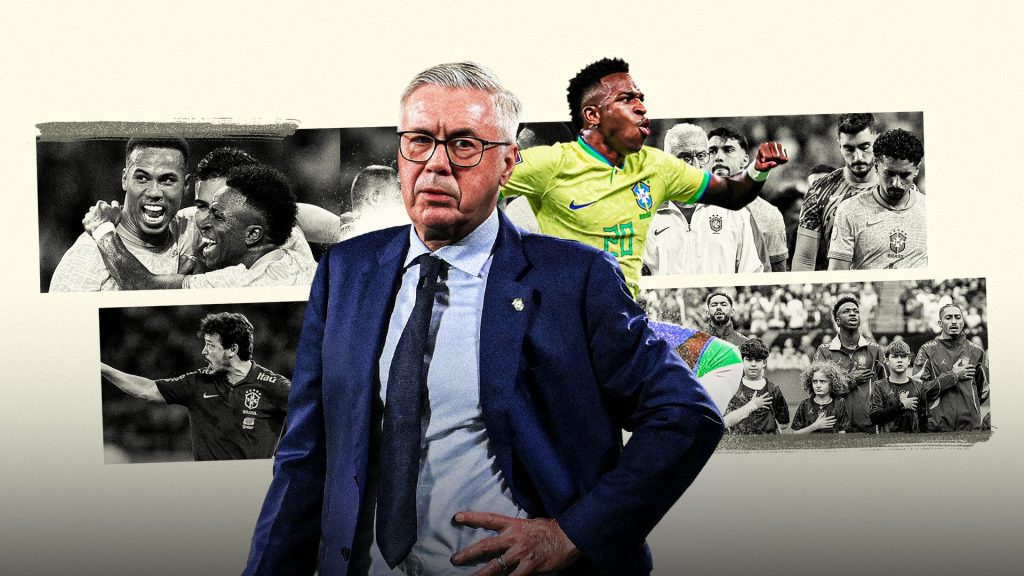
The consensus belief – and it may still hold true – is that Brazilian coaches have long been outdated. If Argentine or Uruguayan managers sometimes coach top clubs in the Champions League, why has no Brazilian done so in decades? The last ones were Luiz Felipe Scolari at Chelsea and Vanderlei Luxemburgo for Real Madrid in the mid-2000s.
Those who succeeded within South America often became victims of Brazil’s relentless coaching carousel, or were eventually appointed to the national team, only to turn from geniuses into failures in the public eye, judged solely by disappointing results.
The same country that exports the best footballers in the world has struggled to produce elite thinkers and strategists. With rare exceptions, Brazil has spent the last few decades recycling the same profiles to lead the national team; from the veteran who succeeded long ago, to the disciplinarian, to the trendy name of the moment, to the fatherly figure.
Carlos Alberto Parreira, a world champion in 1994 and one of the leading tactical minds of his generation, led the team again in 2006, but failed to organize a squad full of stars such as Ronaldo, Ronaldinho, Adriano, Kaka, Roberto Carlos, Cafu, Dida, Juninho Pernambucano, Ze Roberto, Lucio and Juan.
The reaction to that failure, blamed partly on the players’ excess of celebration and ego, was to appoint a hardliner who had never even coached a club: Dunga, Brazil’s triumphant captain from 1994. He had two stints, between 2006–10 and 2014–16, but neither impressed.
Mano Menezes briefly rode a wave of popularity after 2010, but couldn’t sustain it. Scolari then returned in 2013 based purely on nostalgia for the 2002 World Cup and his famous ‘Scolari Family’. He even appeared in an advertisement playing a loving father figure guiding children on a football pitch. In the end, that fatherly image became cruelly ironic when Brazil lost 7–1 to Germany in a World Cup semi-final that resembled men against boys.
Among this rotating cast of characters, Tite seemed the most prepared when he took charge before the 2018 World Cup. His early run in the qualifiers was inspiring, and having emerged as the best coach in Corinthians’ history, winning nearly every major title available, he commanded universal respect. He was even described as ‘a European coach in Brazilian skin’.
But Tite, too, fell short, unable to get past the quarter-finals at two World Cups. After stepping down in 2022, he failed to land any major job in Europe, as had been his dream.