‘We’re all looking for any advantage’ – From finding Mohamed Salah’s replacement at Liverpool to ChatGPT tactics: How AI is changing soccer
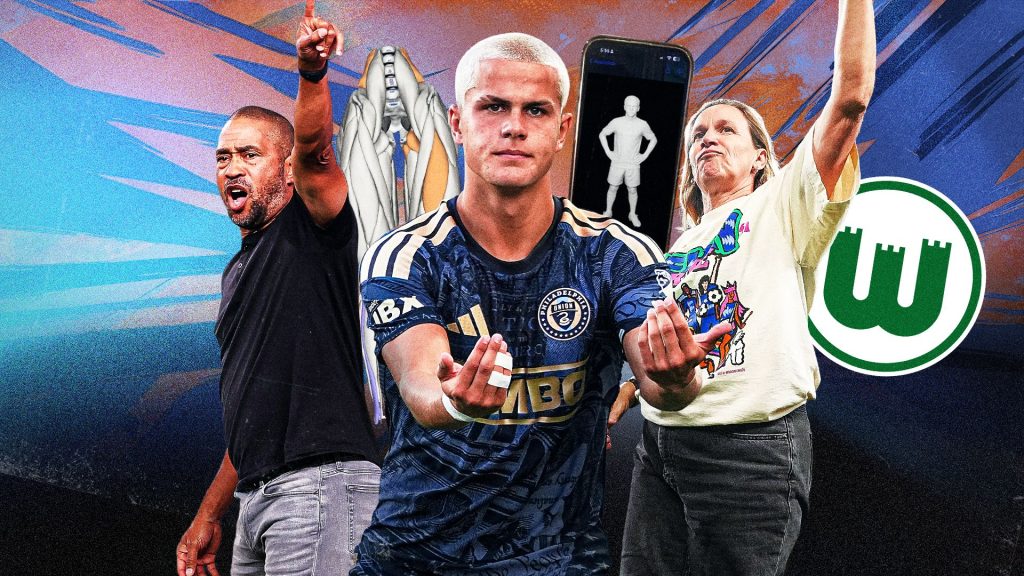
Every day, the Philadelphia Union’s academy staff are faced with a crucial set of questions: what level are their players ready to play at? What is the line between physical development and quality on the pitch? How much first-team football is a talent such as Cavan Sullivan ready to handle as a teenager? Will his body cope?
Traditionally, there is no singular answer. MLS clubs do all sorts of testing on strength, size, likely height and peak performance. It’s all time-consuming guesswork.
Fit:Match, though, do believe they can be a little bit more hands-on – and faster. All it takes is a phone and 10 seconds to get a glimpse of a youth footballer’s future.
It works like this: the user takes four pictures of their subject, from various angles. The phone calculates height, body mass, wingspan – every single measurement you can name. It then calculates far more advanced stuff: likely height, growth maturation, a basic picture of what full fitness might look like for the kid – before presenting it to the user. The tech’s founder, Haniff Brown (semi) jokes that it is “ChatGPT for soccer.” A process that is fairly standard at any given professional soccer club is simplified, executed, and given to the user in less than 30 seconds.
Brown got his start in the fashion industry. He found that instantaneous body scans, using smartphones, could speed up the process of trying on clothing.
“How can we allow [a user] to upload a body profile of himself so that he doesn’t have to buy four shirts and return the three that don’t fit? You’ll just buy one and boom,” Brown said.
Soon, others took notice. Brown started getting calls from hospitals and healthcare companies. In 2024, they worked with an unnamed European club that asked them to scan their academy players. Brown realized there was scope for a more ambitious system.
“I was very clear from the start that it had to take no more than 15 seconds, and the reason I was clear on that is that I realized that coaches don’t like assessments that take too long. They want the kids going back, doing their drills,” Brown explained. “The longer and more complicated the assessment is, the less likely they are to use it.”
The club was sold, and others started to get involved. There were further roadblocks, though, not least the fact that different coaches came up with different results in the same basic medical testing.
“What we saw was one coach would, for the same player, measure and get one result, and from the same team, another coach would measure that same player and come up with a different result,” Brown explained.
So, Fit:Match standardizes it. Four photos, 30 seconds to load, and a detailed profile of a player becomes available. Nowadays, it’s used by both clubs and kids.
“When parents register their children to go into an academy, they can actually upload their photos. It generates their digital twin, and then on the back end, we tell MLS all these stats on that player,” Brown said.
That helps clubs make more educated guesses as to what age groups should be utilized. The landscape of youth soccer is still, at least partially, influenced by physical size.
“A player who is a 14-year-old but an early developer is far different from a player who’s 14 and a late developer, and now MLS can scientifically tell that, and then make better pathways for those late developers so that they don’t drop out of the ecosystem,” Brown said.